
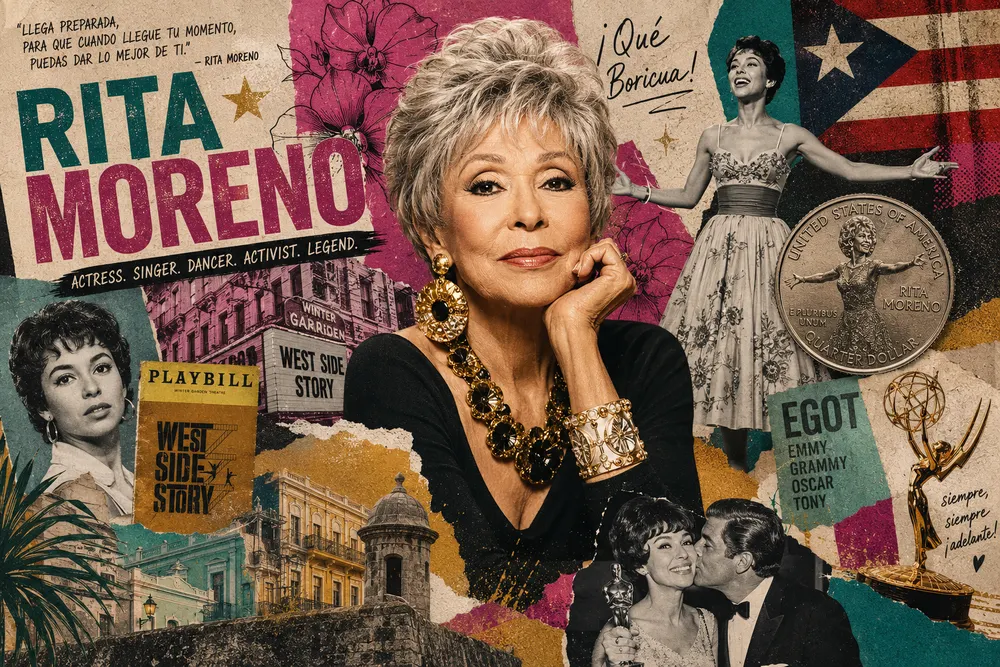
ROCHESTER, N.Y. — She signed her name across a portrait of her own face, and set it down for the museum to keep.
That was the quiet detail that closed the afternoon, before the crowd, before the gala, before Rita Moreno stood in Rochester and it became official: the George Eastman Museum had given her its award, the one it created in 1955 to say a life in film matters as much as the films themselves.
The day started smaller. In the Dryden Theatre, Moreno sat for a press conference, warm and quick by every account, unwilling to be anything but herself under the weight of the occasion. Museum Director Dr. Bruce Barnes opened the proceedings. Rochester Mayor Malik Evans followed. Then it was Moreno's turn, and she talked her way through eight decades like someone still deciding which parts of the story matter most.
They matter, evidently. The museum said so with its list of who came before her: Charlie Chaplin, Audrey Hepburn, Meryl Streep. Moreno becomes only the third Hispanic performer to receive the award since it began, following Ramon Novarro in 1957 and Dolores Del Rio in 1982. Seventy years, three names. The pace says something on its own about how long the industry took to open this particular door, and how rarely it has handed the key to a Latino artist.
Moreno's case does not need much argument. An Academy Award for Anita in West Side Story. The rare distinction of an EGOT, an Emmy, a Grammy, an Oscar, a Tony, earned across mediums that don't often reward the same person twice. A Presidential Medal of Freedom. A National Medal of Arts. She debuted on Broadway at thirteen, a girl from Puerto Rico finding her way onto a stage that had no obvious place waiting for her, and built the rest from there.
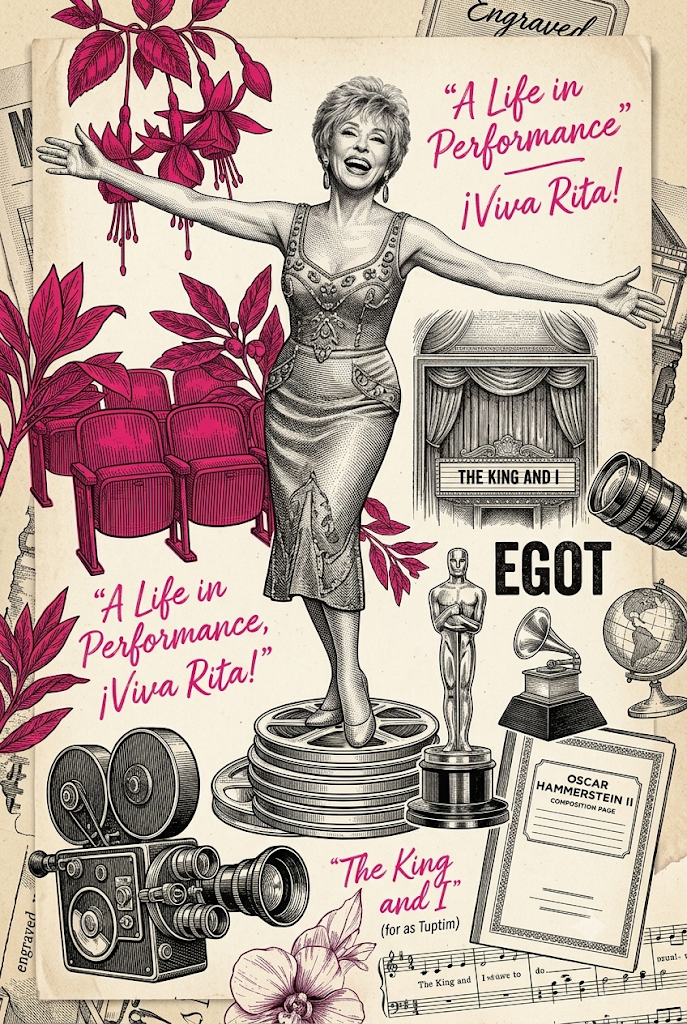
The evening program treated that record like something to be studied, not merely applauded. Senior Curator Peter Bagrov delivered a career appreciation. A reel ran through her most recognized roles. Then Moreno came out for an on-stage conversation, the audience getting the version of her that doesn't fit into a highlight clip, before the gala took over the rest of the night.
Diana Kleps, Managing Director of Latino Professionals, was in the room. She said watching Moreno be honored "in a room that holds the history of film was profoundly moving." Moreno, she said, "is not just an award-winning actress; she is a cultural cornerstone who paved the way with every role, proving that talent and tenacity can transcend any barrier." What stayed with Kleps was the second layer of the recognition, not the art alone but "her pioneering spirit," and what it meant to witness "the doors she has opened for so many of us."
That, in the end, is what Rochester gathered to mark. Not longevity by itself, though eight decades in an industry built to move on quickly is its own kind of feat. The George Eastman Award exists to preserve film, the physical record of it and the memory of who made that record worth keeping. In Moreno, the museum found both: work that has held up, and a life that shows the cost and the return of insisting on a place in the frame. Three names in seventy years is not a large number. It is, still, a door held open. On Wednesday night, Rochester watched her walk through it once more, in case anyone in the room had missed it the first time.
Event Host
The George Eastman Museum, a museum in Rochester, New York, dedicated to the art, history, and technology of photography and motion pictures, presented Rita Moreno with its George Eastman Award. The ceremony was held October 29, 2025, at the Dryden Theatre in Rochester, New York.
Reported and written by Valentina Cruz, Culture & Arts Editor, for Latino Professionals Magazine. → Full archive
RECORD №00110 · MMXXVI · Latino Professionals Magazine
Published by Latino Professionals Media Group.
Documenting the people, ideas, and institutions shaping American business.