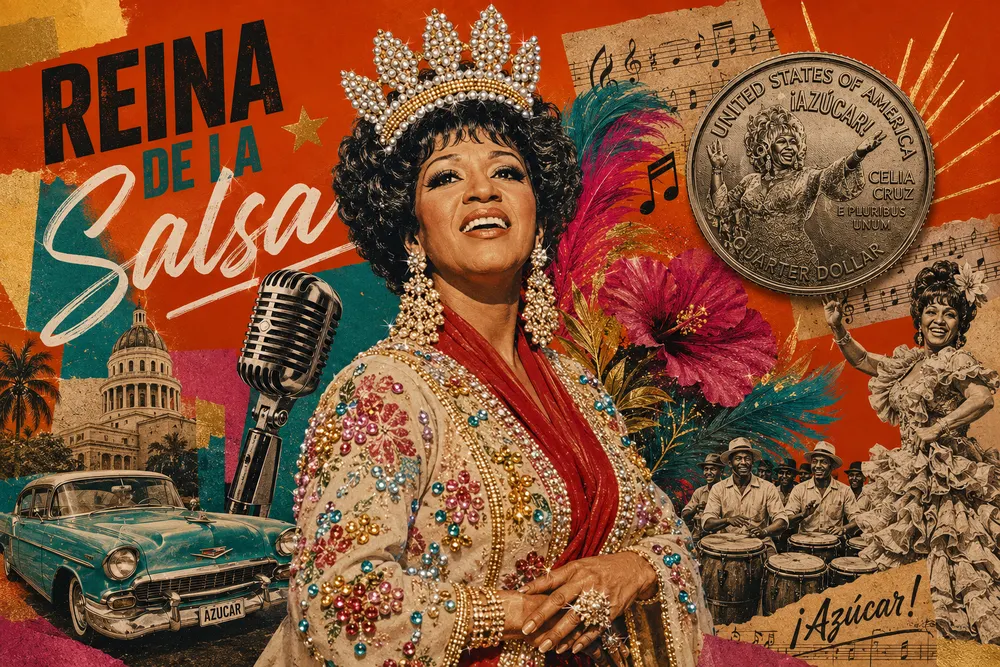
A coin is a small thing to carry a life this large. Yet there it is: the profile of Celia Cruz, Queen of Salsa, struck into a U.S. quarter released this year as part of the Mint's American Women Quarters Program™. She is the first Afro-Latina ever to appear on American currency — a fact that took nearly a century to arrive, and outlives the woman who earned it by more than two decades.
Cruz was born in Havana in 1925. She had once planned to teach, enrolling at the National Teachers' College before music pulled her fully into its orbit. By the 1950s she was the lead singer of La Sonora Matancera, one of Cuba's most celebrated orchestras, already shaping a sound that braided African rhythm into Latin form. The Cuban Revolution sent her into exile, a rupture she carried into every recording that followed. Cuban exiles across the diaspora heard their own displacement answered back in her voice, and that connection became the foundation of a six-decade career: more than 70 albums, 23 gold records, three GRAMMY® awards, and four Latin GRAMMY® awards.
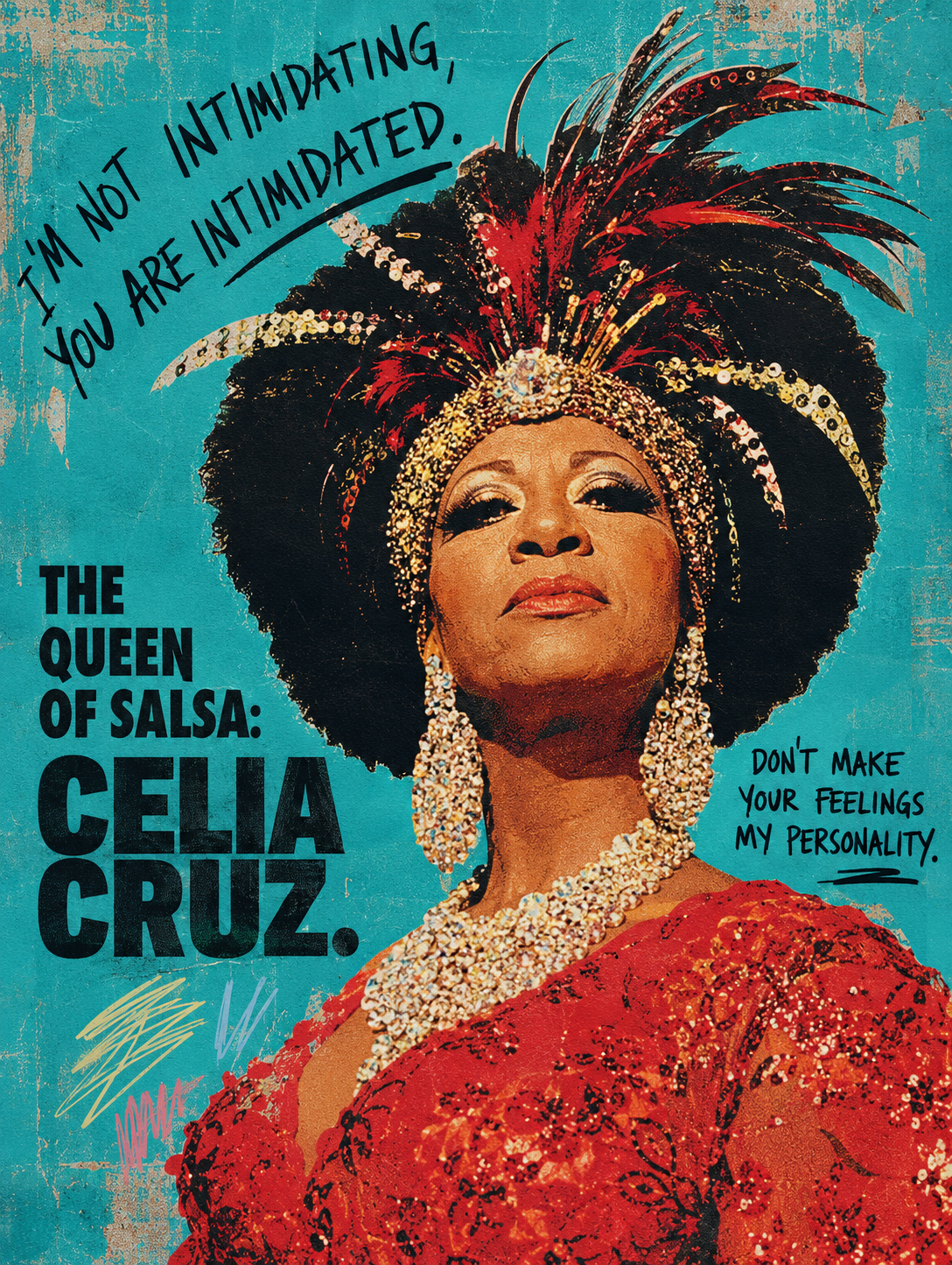
Her signature cry, "¡Azúcar!" — sugar — became shorthand for a way of meeting hardship: transform it, don't shrink from it. The wigs, the costumes, the sense of style that made her a fixture of fashion writing as much as music writing, belonged to that same instinct for turning a stage into a full statement. The Smithsonian's National Museum of American History now holds a collection of her personal items and performance costumes, one of the few Latin artists with a standing place in that archive.
This year, the Mint added a coin to that record. Cruz joins a small group of women selected for the American Women Quarters Program, among them Patsy Takemoto Mink and Dr. Mary Edwards Walker — company that places her inside the official account of who shaped this country's culture. Omer Pardillo-Cid, executor of the Celia Cruz Estate, described what the honor means: "Celia's life exemplified resilience, talent, and passion. Being recognized on U.S. currency is a tribute she would have never imagined, yet it perfectly encapsulates the global influence she had. This quarter is a fitting tribute to her legacy."
The Estate has kept building on that legacy in parallel. It released Celia Cruz En Vivo: 100 Años de Azúcar, an album of previously unheard live recordings from the mid-1980s, and partnered with Leon Medical Centers in Miami to distribute the commemorative quarters in special packaging for fans and collectors. Both efforts run through the same organization founded to manage her intellectual property and maintain the Celia Cruz Legacy Project Archive and Research Center for whoever studies her next.
None of it changes what the coin already says, in a form built to outlast any one person's memory: a Cuban-born, Afro-Latina woman shaped American music for six decades, and the country has now written her into its currency too. Forward was always the direction her music moved.